Phases of Spiritual Growth
Growth as a Progression and Cycle
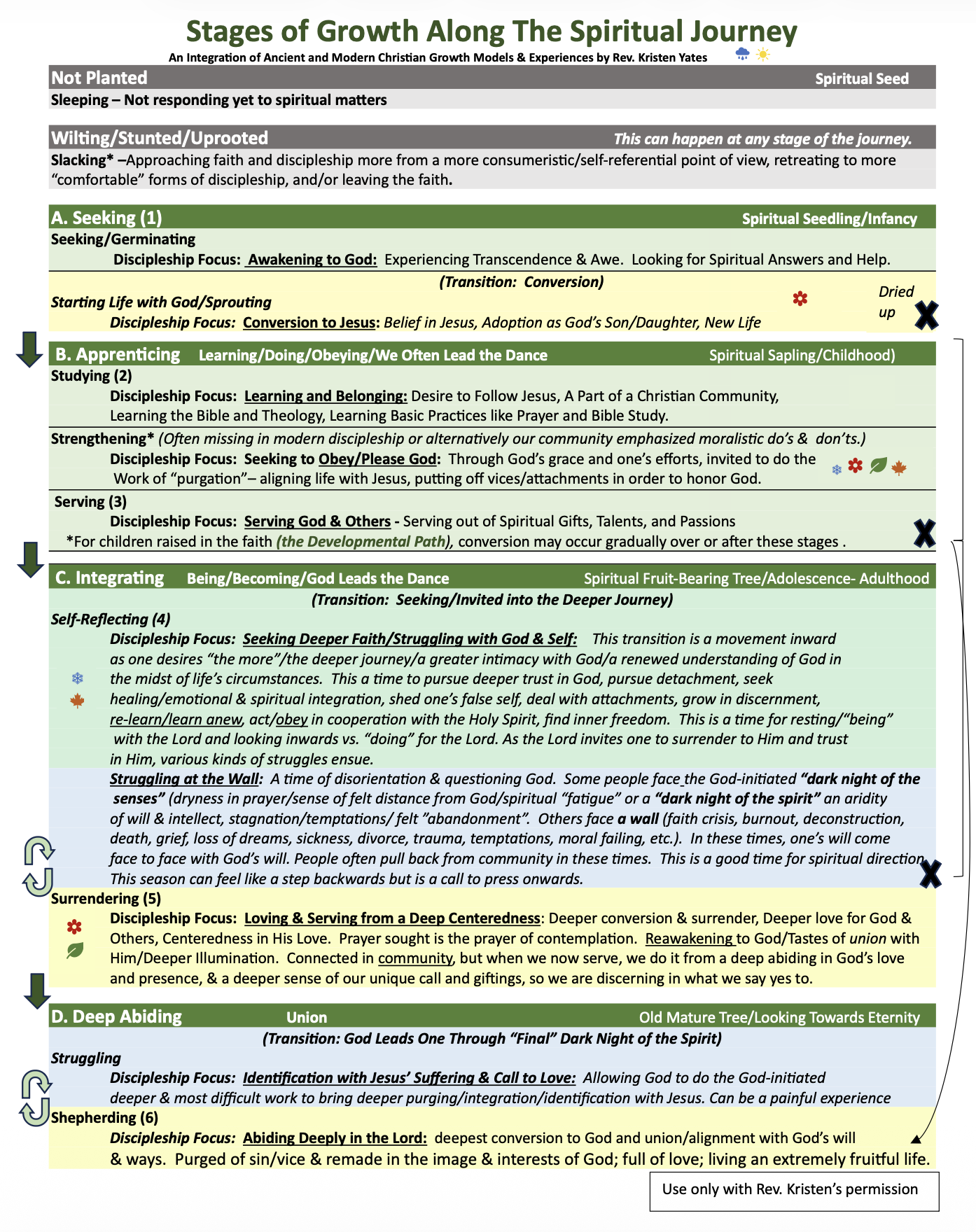
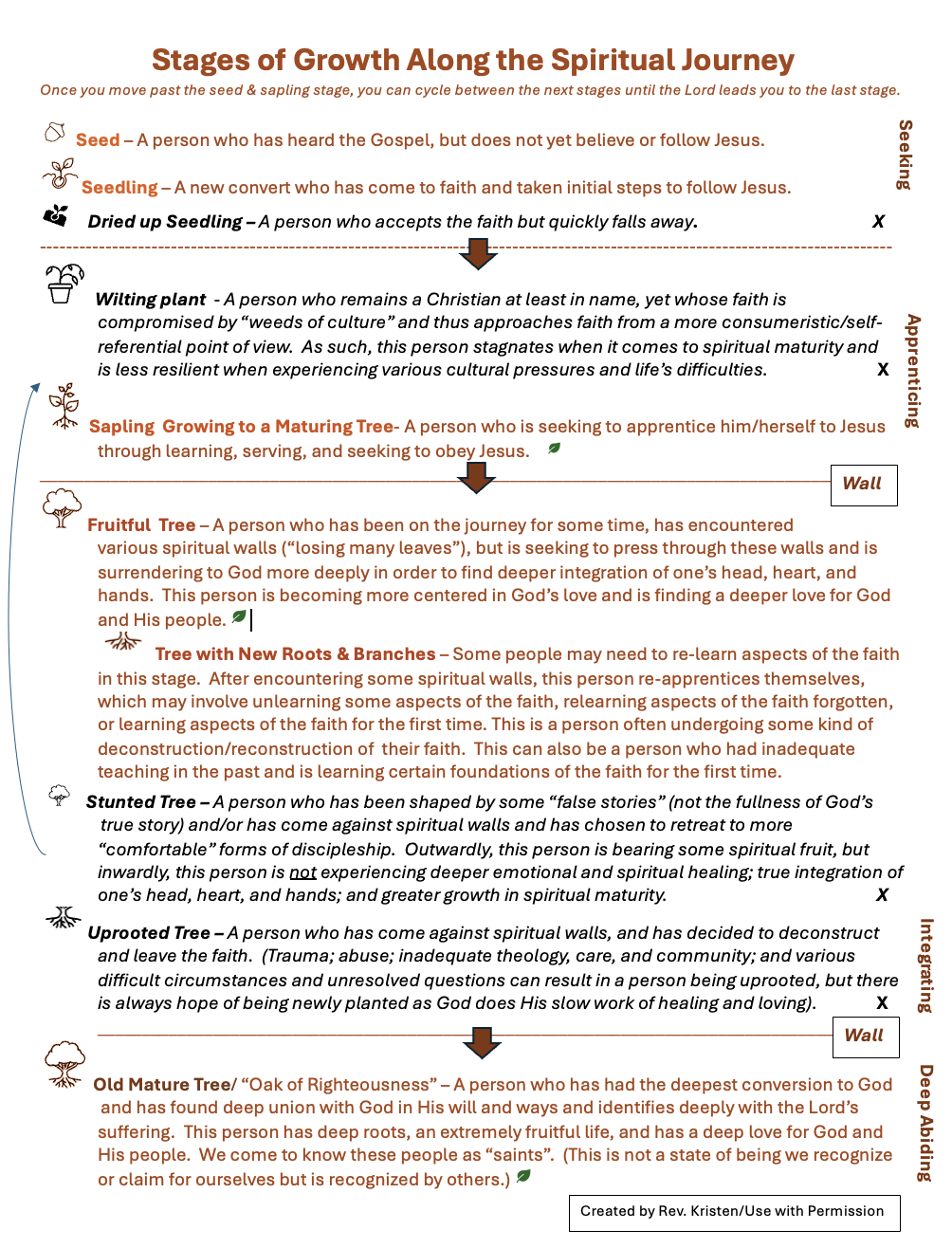
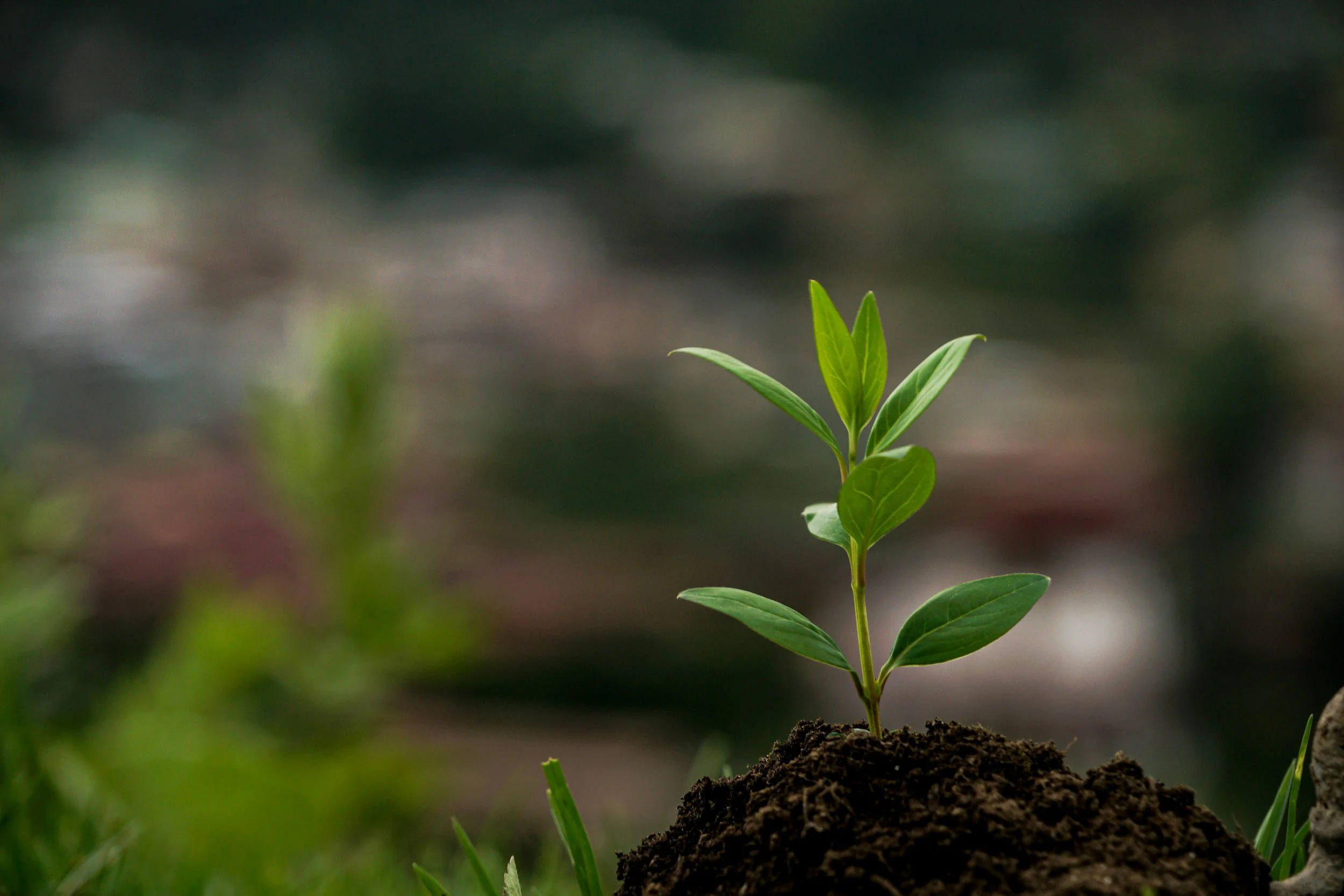
Just like trees, or any other plants, for that matter, grow and experience different phases of growth (seed, seedling, sapling, young tree, and old mature tree), we as followers of Jesus go through different phases of spiritual growth. In the spiritual life, there are four main phases: Seeking, Apprenticing, Integrating, and Deep Abiding.
These phases both represent stages that we can progress through in a somewhat linear fashion, as well as phases we can cycle through during our entire lives as we follow Jesus. And since it can sometimes be helpful to know where we are in this growth cycle or progression, we are going to talk about these phases in this post First off, we’ll talk about them as a spiritual progression throughout our lives, where we steadily grow in spiritual maturity. Then, we’ll talk about them as phases we cycle through throughout the spiritual journey. And since I previously wrote about the Stages of Growth that Hagberg and Guelich talk about in the “Critical Journey”, throughout this post, I will note how their stages fit in with these phases of growth. You will note that what Hagbert and Guelich say is very similar to what I am will write about here; mine is simply an attempt to integrate their work with the classical three-fold journey spoken about by Christians for thousands of years, as well as my own observations of the spiritual journey and my plant growth metaphor for spiritual formation.
The Phases as Progression Along the Spiritual Journey
In some ways, the spiritual journey is like a progression to deeper levels of growth and intimacy with the Lord, as we move from stage to stage, which is precipitated by something that leads to a deeper conversion to Jesus’ will and ways. And in each phase, we have different discipleship needs and practices to engage that will help us best connect with the Lord in those times.So let’s now look at these stages and their transition points.
0 - Not Planted
Before we even begin our journey of growing into spiritual maturity, we find ourselves in a phase that I call “not planted”. This is a time where we may be exposed to spiritual matters, but we just are not interested.
1-Seeking
In this phase, “spiritual seeds" are planted and they begin to germinate. As we awaken to the reality of God in the world and in our lives - The Good, the Beautiful, and the True - we begin to pursue God in our lives. While this phase is experienced differently by each person, at the basic level, we come to recognize that God exists in this stage. This initial recognition may be accompanied by a great sense of God’s love for us, a realization that He is a marvelous Creator, or an acceptance that He is our rescuer and redeemer. For some, this awakening eventually leads to a sprouting of faith - a conversion to Jesus where we come to know Him as our Lord and Savior, and this conversion can serve as a transition point into the next phase of growth Two phrases that best summarize this phase are Seeking and Starting out Life with God.
An important note: While this is an exciting phase that feels full of life and potential, it is possible for people to get stuck at this phase or to fall off altogether. To move forward, people must take the necessary step of moving from simply believing in Jesus to following Jesus. (This is Stage 1 in the Critical Journey.)
2-Apprenticing
In the next phase, we grow into “spiritual saplings” as we begin to truly follow Jesus and to be his disciples, his apprentices. Generally speaking, in this phase, we have a great need to be in Christian community and to learn about the faith. We begin to recognize that we have desires, gifts, and unique calls to serve God, the Church, and others, and so for some of us, our faith leads us outward. For many of us, we also start to recognize our sinful desires, and thus, we seek to “purge” our lives and align them with Jesus’s life. Overall, this phase is focused on the externals of the faith (our learning and doing) and can be summed up with three words: Studying, Serving, and Strengthening. Practically speaking, our activities during this stage can look like participating in Sunday worship, being part of small groups, taking classes at church, learning to pray and read the Bible, going on Mission trips, and a whole lot more. Eventually, for some of us, it can also eventually involve stepping into various kinds of leadership roles where we begin to apprentice others.
An important note: This phase is the one that most modern disciples are most accustomed to and also where churches generally put all their efforts. Thus many modern disciples may never move past this phase, and that includes those in pastoral leadership.). (This phase aligns with Stages 2 and 3 in the Critical Journey.)
3-Integrating
In this next phase, we begin an inner journey, where we move past simply thinking about the externals of our faith and begin to more seriously integrate our heads, hearts, and hands so that we might become more fully the people that God has created us to be. This phase begins with spiritual adolescence and moves us into spiritual adulthood as we increasingly become “fruit-bearing trees”. If there are three words that best describe this phase, it is Self-Reflecting, Struggling and Surrendering, and generally speaking, we enter into this phase of the spiritual life through struggle, what Hagbert & Guelich call the Wall, a difficult experience or a God-given dark night of the senses that has the potential to lead us into a deeper kind of conversion to Jesus. Now, If we resist the wall, we either fall off the spiritual path altogether - this is a place where deconstruction often happens. Or we return to the “easier” externals of the Apprenticing phase, or alternatively, we get stuck in a place of sadness, depression, angst, numbness, or acedia. However, if we surrender to God as we journey through the wall, it ultimately leads us into a deeper love for God and others, a deeper centeredness in the Lord’s love, and growth into our truest selves as created by God. Now surrendering to God can also involve a degree of deconstruction at times, but this is the kind of deconstruction that does not abandon the faith altogether but sheds unhelpful additions to the faith we have inherited and reconstructs it into a form that is ultimately more faithful to Jesus.
An important note: Once we move into the integrating phase, we will most likely stay in this phase for most if not the entire length of our spiritual journey. And it will involve going through a series of walls and moving back and forth between struggle and surrender and will altenate between feeling like we are in a spiritual desert or we are in a place overflowing with love, light, and life. As noted before, however, we can at any point, also choose to move back to the “easier feel” of the Apprenticing Stage. (This phase aligns with Stages 4 and 5 of the Critical Journey".)
If you would like to learn more about the wall, read here (in my explanation of the stages from “The Critical Journey”) or check out the phases of growth graphic below. Also, I will later write an article on the dark night of the senses that I mentioned above.
4-Deep Abiding
The final phase is our ultimate destiny as followers of Jesus, which involves the deepest conversion to God, which result in a deep intimacy with the Lord and a fuller alignment with His wills and ways. That said, only a few people seem to reach this phase on this side of heaven. We generally acknowledge them as saints. After having deeply struggled and surrendered to the Lord, gone through a particular wall called the dark of the spirit and and having purged themselves of most of their sins and vice, these people are overflowing with love, for both God and neighbor. Their lives are generally marked by extensive prayer and contemplation, as well as a great fruitfulness in the world, which brings light and life to people around them. This phase can best be described with the words Struggling and Shepherding.
An important note: This phase will be perfected in eternity with Jesus, and again, this is the ultimate destiny for all disciples, whether experienced on this side of heaven or the other. (This phase aligns with Stage 6 of the critical journey.)
When We Get Stuck Along the Journey
Though I have now outlined the 4 main phases of the spiritual journey, I want to mention a few sub-phases that we might find ourselves in throughout the journey.
Dried Up Seed - Falling Off at the Seeking Phase: For some people who accept Jesus, they have excitement in the moment, but their faith does not take root, and they soon thereafter leave the faith.
Wilting - Stuck at the Seeking Phase.: Christians who accept Jesus but do not ever really take on the identity and life of a disciple could be said to be “wilting”. These are people who remain Christian in name yet approach the faith from a more consumeristic and self-referential standpoint. These people stagnate when it comes to spiritual maturity and are less resilient when experiencing various cultural pressures and life’s difficulties.
Stunted - Stuck at the Apprenticing & Integrating Phases. Christians who get tripped up at the wall and have a difficult time moving forward may end up “stunted” in their spiritual growth (All of us at some point in time find ourselves here!). This does not mean that we are not growing at all, but it does mean we are allowing false stories to shape our lives or are we are retreating to “more comfortable” forms of discipleship rather than doing the more difficult work of integrating our heads, hearts, and hands. Thus, we do not experience the deeper emotional and spiritual healing and freedom that the Lord ultimately desires for us.
Uprooted - Stuck at the Integrating Phase. While some Christians who get tripped up at the wall nevertheless continue on in the faith, some people decide to deconstruct at this point. They become uprooted in their faith. There is always a chance they could be grafted back in at a later time, but for now, they walk apart from the Christian faith.
When we Deconstruct and Reconstruct Along the Journey
We have already talked about people who deconstruct when they hit various walls along the spiritual journey, but it is important to note that deconstruction does not necessarily mean leaving the faith. For those who are like a ”tree with new roots and branches”, some Christians need to shed some unhelpful beliefs and behaviors they have accumulated over the years and they also need to re-learn aspects of the Christian faith that they never learned or have forgotten. This re-learning can happen in the integration phase.
The Phases as Cycles We Encounter Along the Spiritual Journey
While it is helpful to think of the phases we talked about above as phases that we progress through during our lives, it is also good to think of them as cycles or spiritual movements. Throughout our spiritual lives, we will return to each one of these spiritual movements, and in those times, the main thrust of our discipleship will be focused on that movement. So, perhaps, we will find ourselves in a time of seeking, where we are awakening again to the beauty, goodness, or majesty of God. Or perhaps, we will find ourselves in a time where our main focus is on learning the faith and so we throw ourselves into a season of deeper study, whether that has to do with learning the Bible, theology, church history, or you name it. Then there will be seasons where our main focus is on integrating our heads, hearts, and hands - of finding healing, freedom, and wholeness which perhaps we’ll find through counseling, addiction support, spiritual direction, pastoral care, or deeper self-reflection. Finally, we might find ourselves in a time of deeper abiding, where our lives are more marked by quiet contemplation of the Lord and resting in his deep love for us and the world. In all these different times, we may find ourselves engaging in seeking, apprenticing, integrating, and abiding, but our main energy and time will be focused on one of these phases.
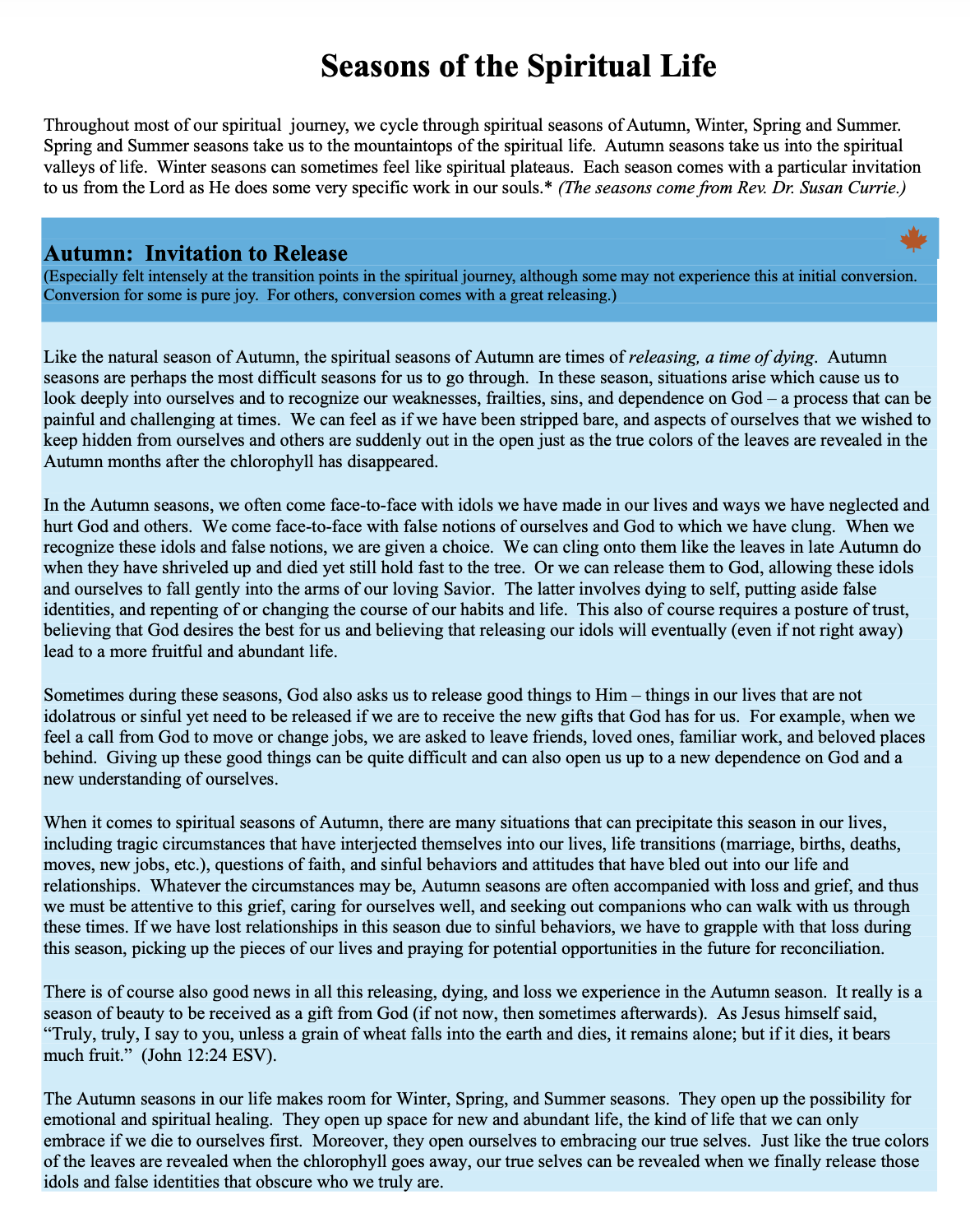
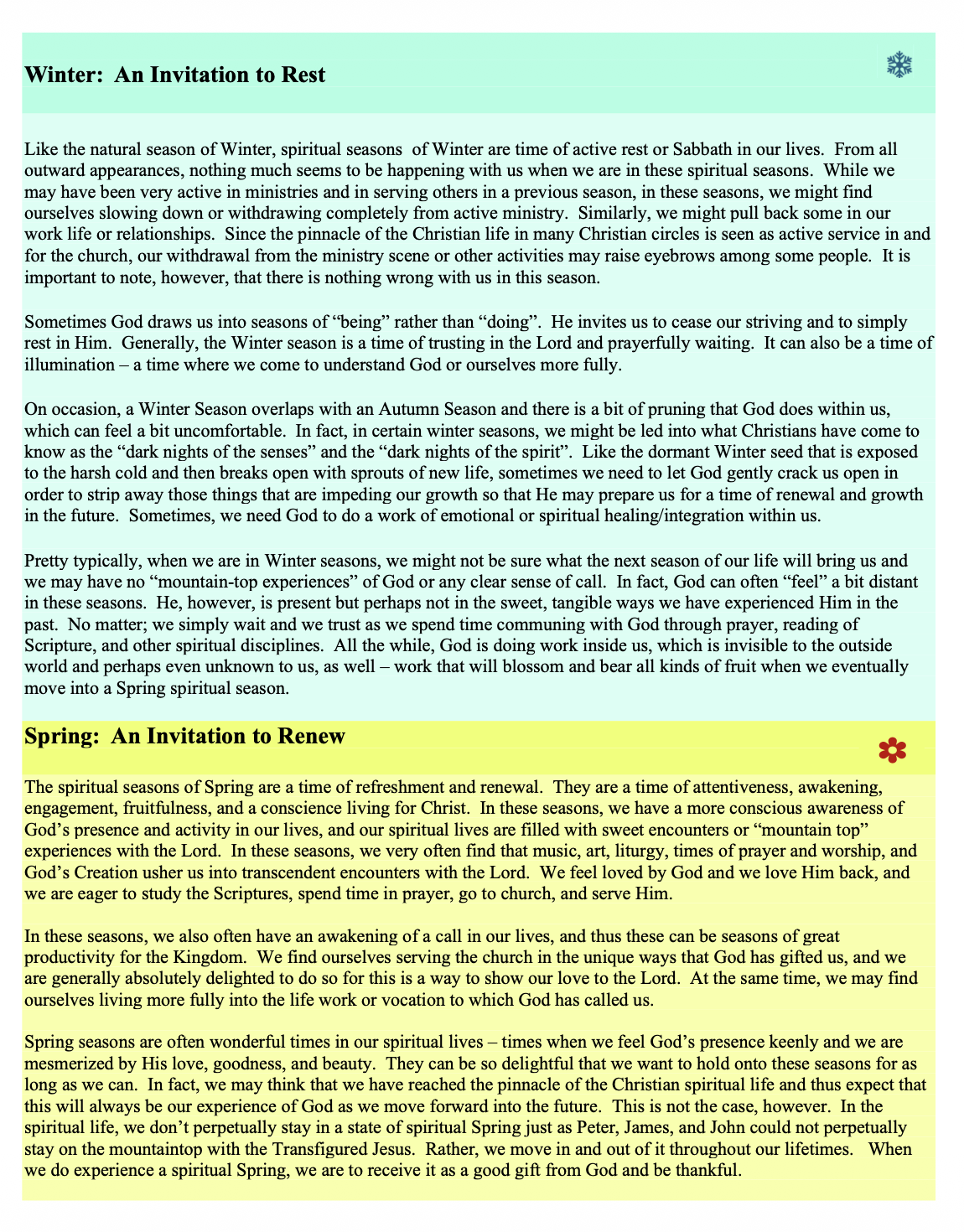
Graphics Reflecting the Phases