Nurturing Environments
How do we cultivate environments that help us flourish as disciples?
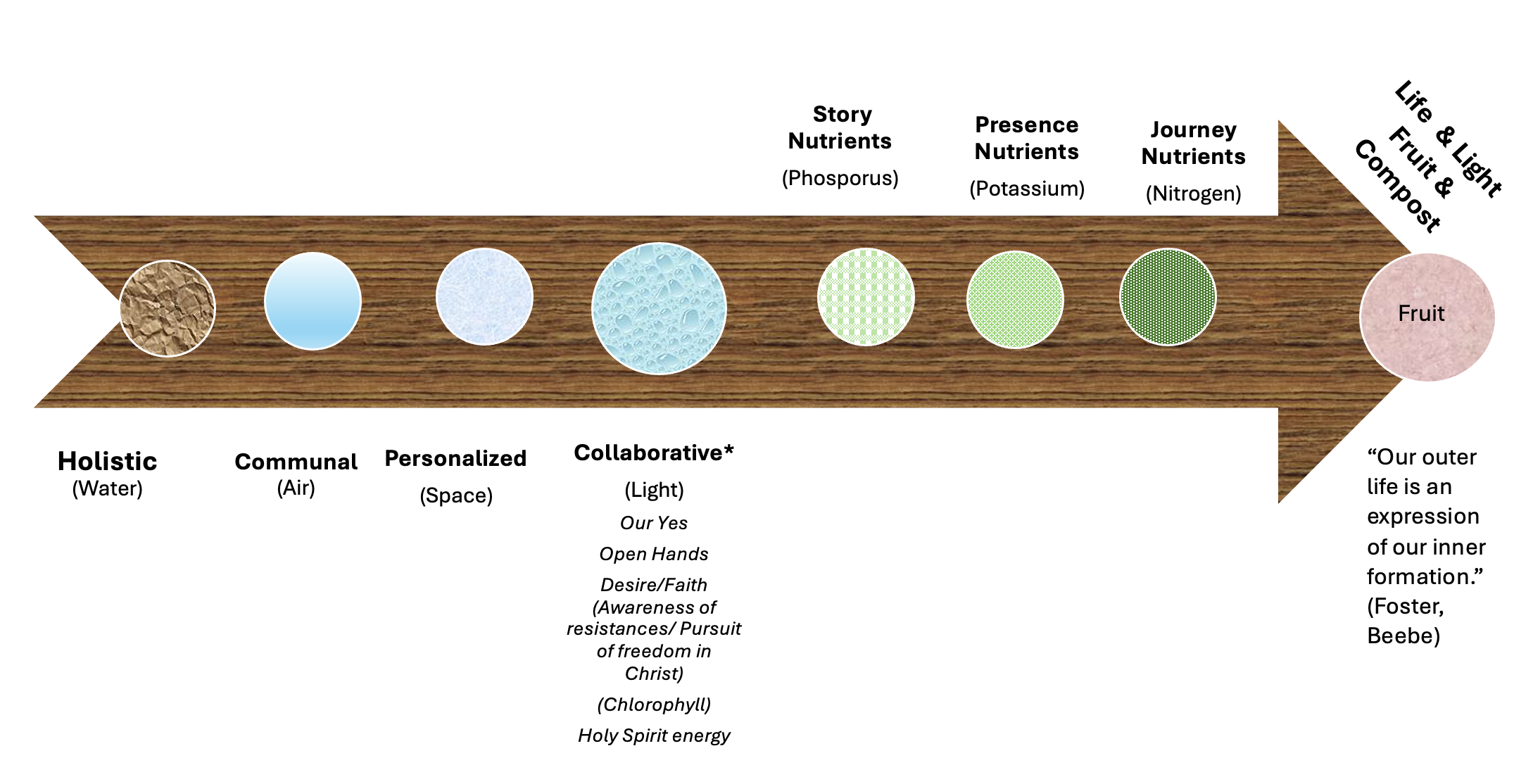
Just as gardens require good conditions (proper light, space, air, and water) to flourish, disciples of Jesus need certain spiritual conditions and nutrients to grow, flourish and be resilient in the ups and downs of life. So what are our “spiritual” light, space, air, and water we need as disciples? Click on the +’s below to find out.
-
(The Holy Spirit and Our Response of Openhandedness: Releasing and Receiving)
The life of the follower of Jesus is a life that is increasingly oriented towards love of God and love of neighbor as we move from self-centeredness to God-and-other-centeredness. It is a life of desire for God, devotion, and intention to love and serve the Lord where we increasingly say “yes” to the Lord. It is a life where we grow in our trust in Him, increasingly surrender our lives to him, learn to recognize His “still small voice”, and respond to his good invitations throughout our spiritual journey.
As such, disciples of Jesus are invited to receive God’s invitations with open hands and to also release all that we have been clinging to, which prevents us from finding true freedom, healing, peace, relational harmony, and transformation. This includes releasing our need to be in control and always be right, acknowledging our limitations, recognizing our need for God, embracing a posture of humility in relationship to God and others, and opening ourselves up to the work of the Holy Spirit.
Thus, discipleship that leads to transformation and resiliency must be a collaboration between us and the Holy Spirit. It is the Holy Spirit who initiates and does the work within us, but we are the ones who either cooperate with the Holy Spirit to do this work, resist His work, or try to do this work on our own (a process John Coe calls “moral formation” which often eventually leads to burnout, despondency, and even giving up on the faith).
To understand what this all means from a transformation perspective, let us use the analogy of a car that carries a person along a road trip. What makes it possible for the car to move forward is the fuel and the engine that converts that fuel into energy. In the journey of faith, our willing surrender to the Holy Spirit is like the fuel. It is a posture of desire for change, obedience, openhandedness to the Lord, and trust in the Holy Spirit’s work within us. It is an attitude of “let it be” (or spiritual “indifference”) that seeks the will of God in our lives and in all things and desires to walk with the Lord hand-in-hand. (James Bryan Smith). And when this fuel – our “yes” to God encounters the engine of the Holy Spirit, it is “converted” into transformational work within our hearts that leads us down the path of growing maturity in Christ.
As another metaphor, which fits with our gardening metaphors of this website, our yeses to the Lord are like light, which when hits the chlorophyll of the Holy Spirit, is transformed into spiritual energy and growth.
Unfortunately, we do not always respond to the Holy Spirit’s initiative with a “yes”. For some of us, we approach the Lord with clenched fists – we are resistant to the Holy Spirit’s work and quite frankly do not desire His work within us. When this happens, this situation is like having a car with an engine but no fuel, for the Holy Spirit will not intrude into our life unasked for our unwanted. For others of us, we do actually want to change, but unfortunately, we think we can change on our own and instead of walking hand-in-hand with the Lord, we move forward with our “hands in our pockets”. When this happens, this situation is like us attempting to push our car along the road for the entire length of the trip. It may appear to be getting us to the destination (in other words, we look more virtuous), but it ultimately leaves us exhausted and unchanged. Thus, true change, where we increasingly “look and act more like Jesus”, emerges as we respond to him with open hands, surrendering to the Lord, responding with desire and faith to the Lord, and allowing the Holy Spirit to do His work within us.
-
God created each one of us as unique beings, with unique gifts and temperaments. We also have unique histories, cultures, ways we have been formed in the faith, and sin proclivities. Moreover, at any given moment, we each occupy a particular season of life and a particular season or stage of faith. Thus, while all disciples share the same goal of “looking and acting like Jesus” and the same foundational discipleship intentions of remembering and retelling our true Story, remaining and revealing God’s presence, and reflecting on one’s spiritual journey and realigning one’s life, there is no one-size fits all program for discipleship. Thus, we each must be discerning, inviting the Lord to show us the particular means in this moment that will help us become growing, resilient disciples.
-
The Christian life is never a solo pursuit. Though we need alone time with the Lord, it is important that we do not pursue an individualistic faith which is disconnected from other followers of Jesus but rather pursue a life which is embedded in a community of fellow believers in Christ. Much of one’s spiritual growth comes in the context of such community, imperfect and messy as it is. This community is the context for growth in love and Christlikeness, as well as encouragement, support, and at times necessary challenge. As such, we are to pursue discipleship in community. We are to be learning and doing life together. Growth and resilience will come through participation in such things as corporate worship and prayer, small group interactions, shared meals, serving together, conversations, and time with pastors, mentors, counselors, spiritual directors and anam cara (spiritual friends).
-
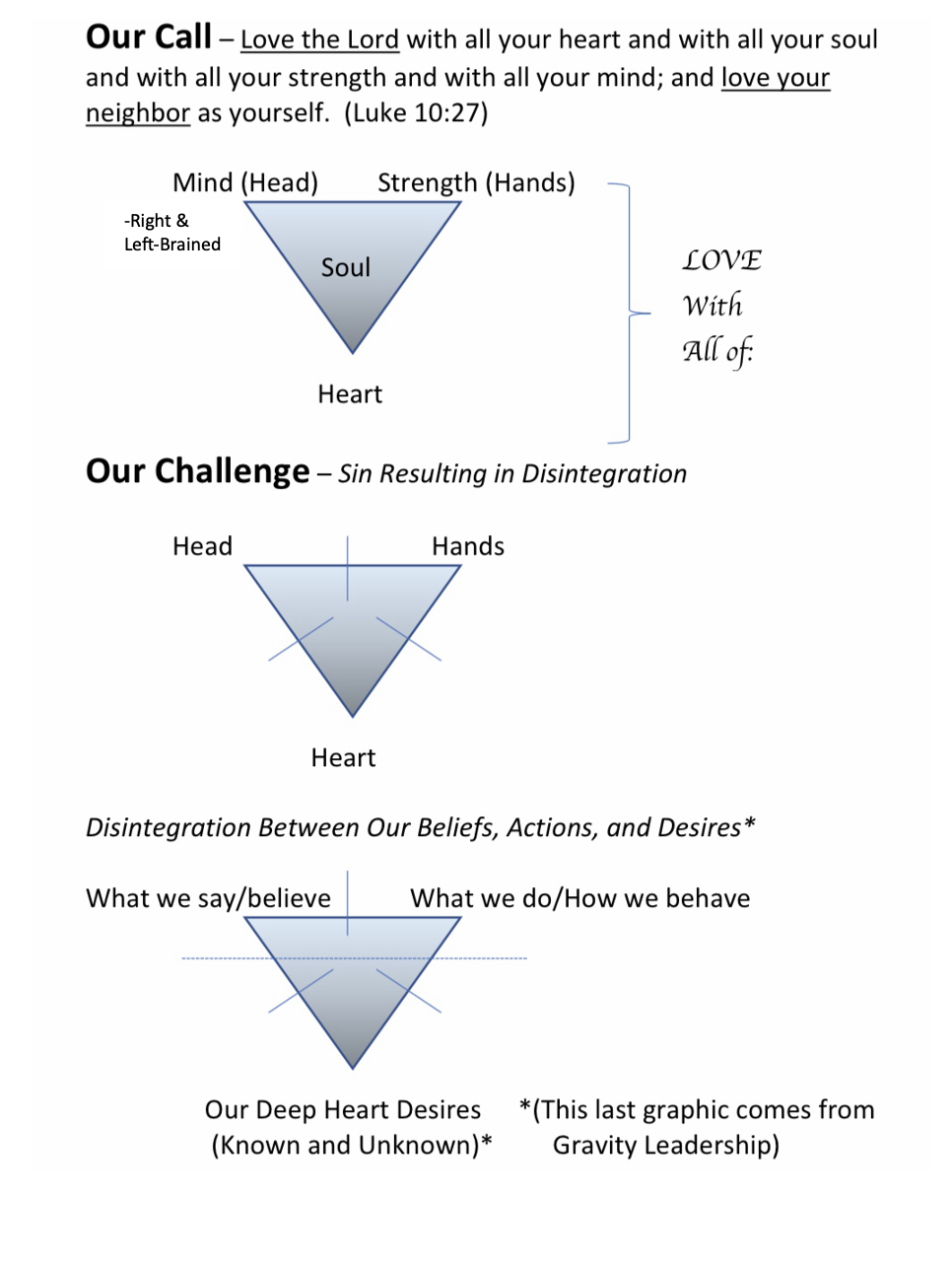
Discipleship that leads to growth and resiliency engages the whole person – our body, soul, and spirit, as well as our heads, our habits, and our hearts. As for the former, we are to recognize that we are a body-spirit unity, and that our physical well-being can and does affect our spiritual well-being. We are not to ignore our physical/material well-being in the pursuit of spiritual growth.
As for the latter, we are to love the Lord our God with all our hearts, our souls, our strength, and our minds, and we are to love our neighbors as ourselves (Luke 10:27). Unfortunately, too often, modern discipleship is reduced to only cultivating head knowledge (what we believe/having certainty about the doctrines of the faith) and doing good deeds (morality, service, mission). While what we believe and what we do is important, we often find there is a disconnect between our beliefs and actions, and so to become a wholly integrated disciple of Jesus, we must also engage our hearts, uncovering what is driving our life and actions and allowing God to transform these drivers (including our distorted desires; our false narratives about God, self, and others; and our sinful proclivities). We must also engage our whole minds, which includes using both our logic/rational thinking and our sanctified imaginations as we seek to encounter and hear from our Lord.
Flourishing Discipleship environments are:
Stay tuned for upcoming posts where I’ll share insights about environments that nurture our life of discipleship.